
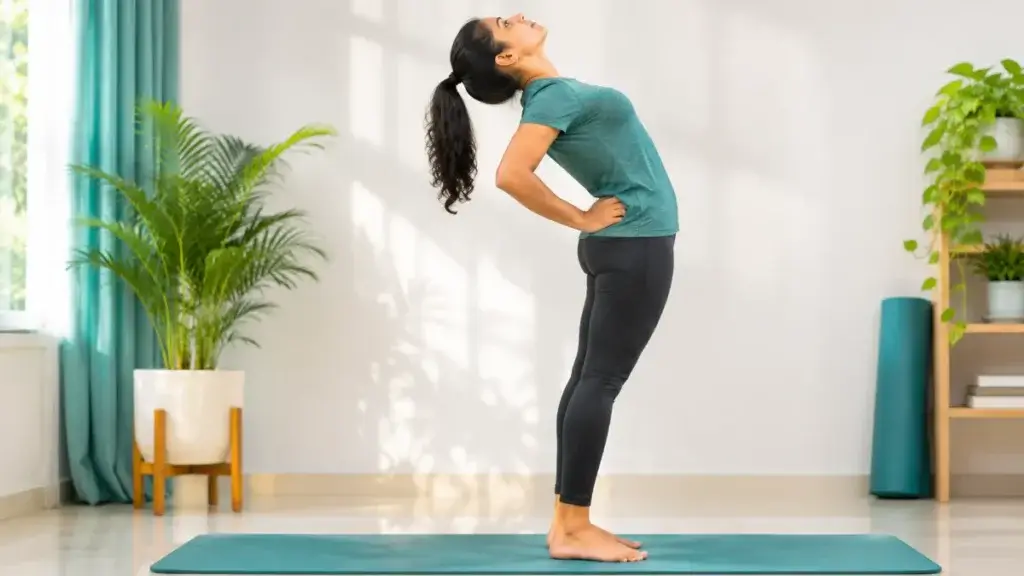
Ardha Chakrasana, or the Half Wheel Pose, is a beginner-friendly standing backbend where you support your lower back with your hands and gently arch backward. It stretches the front body, improves spinal flexibility and is often used to prepare for deeper backbends.
Quick Answer – Key Takeaways
- Ardha Chakrasana is a standing backward bend that stretches the chest, abdomen and spine.
- It is part of the Ministry of AYUSH’s official Common Yoga Protocol for daily practice.
- Hold the pose for 10 to 30 seconds with normal breathing, 2-3 rounds.
- Avoid it if you have uncontrolled blood pressure, back injury, vertigo, hernia or are pregnant.
- Common mistakes include bending only from the lower back and dropping the head too fast.
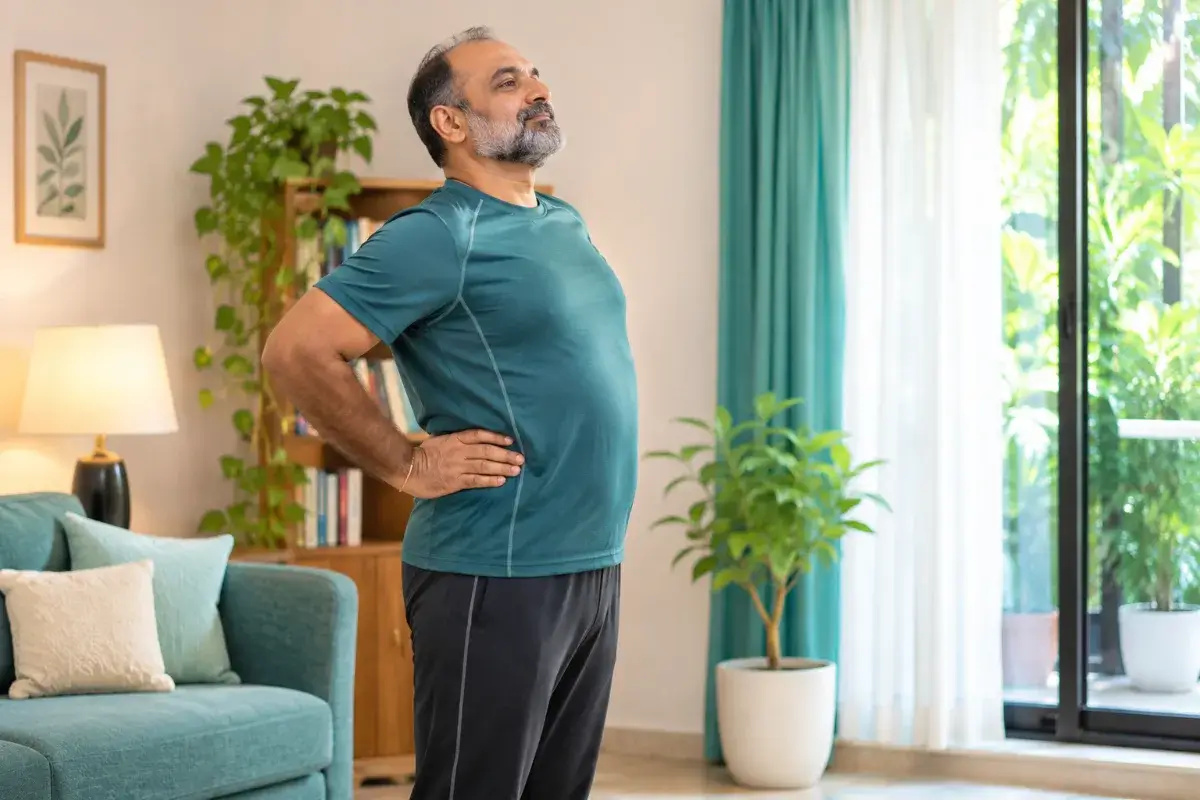
What Is Ardha Chakrasana (Half Wheel Pose)?
Ardha Chakrasana comes from Sanskrit: “Ardha” means half, “Chakra” means wheel and “asana” means posture. In this pose, the body forms the shape of a half wheel.
It is a standing backbend where the hands support the lower back while the chest lifts and the spine arches gently backward. Ardha means half, Chakra means wheel, and as the body takes the shape of a half wheel, it is called Ardha Cakrasana.
This asana is included in the Ministry of AYUSH’s official Common Yoga Protocol under standing postures, alongside Tadasana and Trikonasana. It is often taught as the first step toward the full Chakrasana (Wheel Pose).
Benefits of Ardha Chakrasana
Regular, careful practice of Ardha Chakrasana may offer the following benefits.
- Spinal flexibility: this practice makes the spine flexible, improves digestion, and helps in overcoming menstrual problems.
- Chest and lung opening: the backward arch expands the ribcage and front body, which many yoga sources link to easier breathing and reduced upper-body stiffness.
- Back strengthening: it massages and stretches the colon and abdominal organs, improving digestion, and strengthens the buttock, calf, thigh and lower back muscles.
- Posture support: it builds awareness of spinal movement and can help counter stiffness caused by long hours of sitting.
- Low back comfort: a systematic review of yoga research found that yoga interventions have the potential to improve spinal flexibility and increase spine mobility in individuals with chronic low back pain, though effects vary by person and yoga style.
Research on yoga for chronic low back pain overall shows a medium to large effect on functional disability and pain after treatment, supporting yoga’s role as a helpful add-on therapy, not a replacement for medical care.
How to Do Ardha Chakrasana – Step by Step
Practice this half wheel pose on an empty stomach, ideally in the morning, on a yoga mat.
- Stand straight with your feet about 2 inches apart, arms relaxed by your sides.
- Support the back at the sides of the waist, keeping the elbows pointing back and roughly parallel.
- Inhale and lengthen your spine upward first, lifting the chest before you bend.
- As you inhale, bend backwards from the lumbar region; exhale and relax. Let the head tilt back gently last, not first.
- Stay here for 10 to 30 seconds, breathing normally. Do not hold your breath.
- Inhale again and slowly come back up to standing, keeping the legs firm.
- Repeat for 2-3 rounds, resting between each round.
Common Mistakes to Avoid in Ardha Chakrasana
Most injuries in this pose happen because of rushing or poor alignment, not because the pose itself is unsafe.
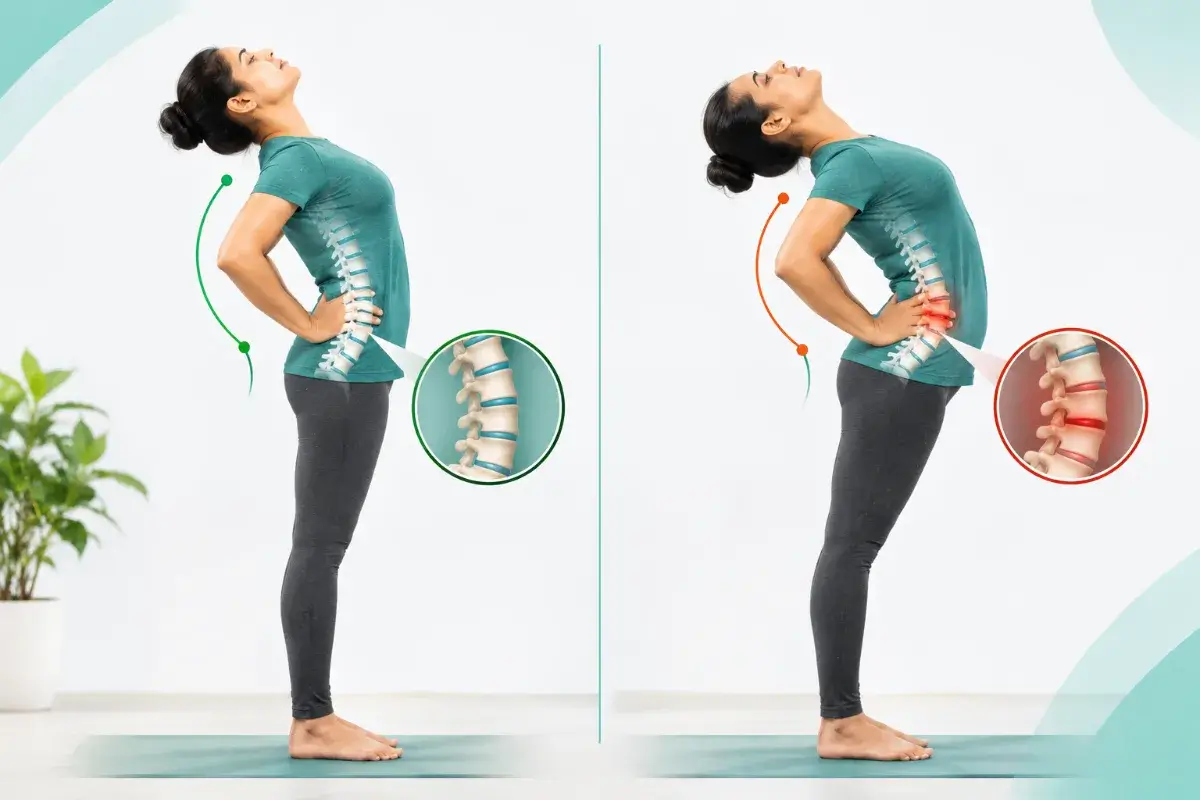
- Arching only the lower back: this can compress the lumbar spine instead of spreading the bend across the whole back.
- Dropping the head first: leading with the head instead of the chest places unnecessary strain on the neck.
- Locking the knees: keep a soft micro-bend in the knees; locking them reduces stability.
- Holding the breath: breath-holding creates tension and makes the pose feel harder than it is.
- Rushing into depth: going too deep too quickly increases the risk of strain, especially for beginners.
- Feet too close or too wide: keep feet hip-width apart for a stable base.
Who Should Avoid Ardha Chakrasana? (Precautions and Contraindications)
Ardha Chakrasana is generally gentle, but it still places the spine into extension, so it is not safe for everyone.
- People with back or spinal injuries, slipped or herniated discs.
- People with cardiac disorders, vertebral and disc disorders, abdominal inflammation, hernia, ulcers, glaucoma or vertigo should avoid this practice.
- Those with uncontrolled high blood pressure or heart conditions.
- Pregnant women, unless specifically advised and guided by a qualified yoga instructor or gynaecologist.
- People recovering from recent back or abdominal surgery.
- Anyone with severe osteoporosis, due to the risk of spinal compression.
If you have had a heart attack or heart condition recently, check with your doctor before trying backbends. You can read more about rising heart attack cases after covid-19 and why extra caution matters.
Women managing bone-related concerns should also look at signs of iron and calcium deficiency, since weak bones need gentler yoga practice.
Diet and Lifestyle Tips to Support Your Yoga Practice
Yoga works best alongside a balanced diet and good breathing habits.
- Practice on an empty stomach, at least 3-4 hours after a meal.
- Eat a protein-rich, home-style Indian diet with dal, curd and seasonal vegetables to support muscle recovery. See this list of high protein vegetarian foods in India for ideas.
- Combine Ardha Chakrasana with simple breathing exercises. Learn more in this guide on techniques to strengthen your lungs.
- Women looking for period-friendly yoga can try these easy yoga poses for period pain relief.
Myth vs Fact
| Myth | Fact |
|---|---|
| Ardha Chakrasana is only for flexible people. | It is a beginner-level pose; depth can be adjusted to your comfort and ability. |
| Backbends are unsafe for everyone with back pain. | Mild, well-aligned backbends may help some people with chronic low back pain, but those with disc injuries should avoid them. |
| You must touch your heels to do this pose correctly. | The pose does not require touching the heels; a gentle, controlled arch is enough. |
When to See a Doctor
Stop practising immediately and consult a doctor if you notice any of these red-flag symptoms.
- Sharp or shooting pain in the lower back, neck or legs during or after the pose.
- Dizziness, blurred vision or fainting while bending backward.
- Numbness or tingling radiating down the arms or legs.
- Chest pain, breathlessness or an irregular heartbeat.
- Persistent back pain that does not improve after a few days of rest.
In case of a medical emergency such as chest pain or fainting, go to the nearest hospital immediately or call 108 / 112.
Conclusion
Ardha Chakrasana is a simple, effective half wheel pose that supports spinal flexibility, posture and chest opening when done with correct alignment. Focus on lifting the chest before you bend, breathe normally and never force the stretch.
If you have a back, heart or spine condition, check with your doctor or a certified yoga teacher before starting.
Frequently Asked Questions
Q. How long should I hold Ardha Chakrasana?
Most yoga guidelines suggest staying in the pose for 10 to 30 seconds with normal breathing, repeated for 2-3 rounds.
Q. Is Ardha Chakrasana good for weight loss?
It can support overall fitness and digestion as part of a yoga routine, but it is not a standalone weight-loss exercise. Combine it with diet changes and regular activity.
Q. Can beginners do Ardha Chakrasana daily?
Yes, beginners without back, heart or blood pressure issues can usually practice it daily as part of a warm-up routine, ideally under guidance initially.
Q. What is the difference between Ardha Chakrasana and Chakrasana?
Ardha Chakrasana is a standing half backbend using the hands on the lower back, while full Chakrasana (Wheel Pose) is a deeper backbend done from the floor with hands and feet on the ground.
Q. Can pregnant women do Ardha Chakrasana?
Pregnant women should avoid this pose unless specifically guided by a qualified prenatal yoga instructor or their gynaecologist, as backbends need careful modification during pregnancy.
Q. Does Ardha Chakrasana help with back pain?
Gentle, well-aligned backbends may help some people with mild back stiffness, and research shows yoga had a medium to large effect on functional disability and pain in chronic low back pain studies. However, those with disc injuries or severe pain should avoid it and see a doctor.
References
Disclaimer: This article is for general information only and is not a substitute for professional medical advice, diagnosis or treatment. Always consult a qualified doctor for any health concern.