
Taking an emergency contraceptive pill, like an iPill or Unwanted-72, can bring a sense of relief when you’re trying to prevent an unplanned pregnancy.
However, what follows can sometimes be confusing. You might experience some Withdrawal Bleeding After iPill and wonder if it’s your period, a sign the pill worked, or something else entirely. This experience is often withdrawal bleeding, a common side effect of emergency contraception.

Understanding what’s happening in your body can ease your worries. This guide will walk you through everything you need to know about withdrawal bleeding after taking an emergency pill.
We will explore how it differs from a regular period, what symptoms to expect, how long it lasts, and when you should talk to a doctor.
What is Withdrawal Bleeding After iPill?
Withdrawal bleeding is a type of vaginal bleeding that occurs after you take a high dose of hormones, such as those found in emergency contraceptive pills.
These pills work by introducing a synthetic hormone, usually levonorgestrel, into your system. This hormone disrupts your normal cycle to prevent pregnancy.
When the effects of the pill wear off, the hormone levels in your body drop suddenly. This sharp decline signals your uterus to shed a small portion of its lining, resulting in bleeding.
It’s called “withdrawal” bleeding because it’s triggered by the withdrawal of these hormones from your body.
It’s a common response and, for many, a sign that their body is reacting to the medication. However, it’s important to know that this bleeding is not the same as a regular menstrual period.
How Withdrawal Bleeding Differs from a Period?
At first glance, any bleeding can look like a period. However, there are key differences between withdrawal bleeding and your regular menstrual cycle.
The cause, timing, and characteristics are distinct. A normal period is the result of a natural monthly cycle where the uterine lining builds up and then sheds when a pregnancy does not occur.
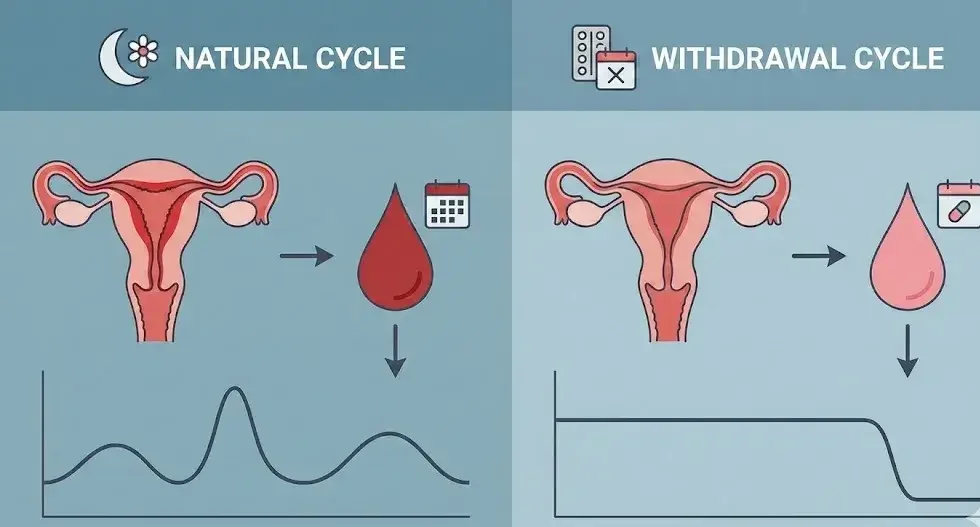
Withdrawal bleeding, on the other hand, is a direct reaction to a sudden hormonal change caused by medication. Let’s break down the main differences to help you distinguish between the two.
Feature | Withdrawal Bleeding | Regular Menstrual Period |
|---|---|---|
Cause | A sudden drop in hormone levels after taking an emergency contraceptive pill. | The natural, cyclical decline of estrogen and progesterone when an egg is not fertilized. |
Timing | Typically occurs within a week after taking the pill. The timing is unpredictable. | Occurs roughly every 21 to 35 days, following a predictable pattern for most individuals. |
Duration | Usually shorter, lasting from a couple of days to about a week. | Generally lasts between 3 and 7 days. |
Flow | Often lighter than a normal period. It might appear as spotting or a light flow. The color can be pink, brown, or red. | Starts light, becomes heavier for 2-3 days, and then tapers off. The color is typically bright red at its peak. |
Symptoms | Symptoms are usually milder. You might have light cramps, bloating, or breast tenderness. | Can be accompanied by more pronounced PMS symptoms like strong cramps, mood swings, fatigue, and headaches. |
Consistency | The uterine lining is not fully built up, so the bleeding is often thinner and contains less tissue. | Consists of blood, mucus, and uterine tissue from the fully developed lining. |
Understanding these distinctions can help you identify what you are experiencing and reduce any anxiety you might feel.
Symptoms of Withdrawal Bleeding
The experience of withdrawal bleeding can vary from person to person. While it’s usually less intense than a period, you might still notice some familiar symptoms. These are your body’s response to the hormonal fluctuations.
Common symptoms include:
- Spotting or Light Bleeding: This is the most common symptom. The flow is generally not heavy enough to require a tampon or a full pad. It might look like light red, pink, or brown discharge.
- Mild Abdominal Cramps: You may feel some light cramping, similar to but usually less severe than typical period pain. These cramps are caused by the uterus contracting to shed its lining.
- Breast Tenderness: Hormonal changes can make your breasts feel sore, swollen, or tender to the touch. This feeling should subside as your hormones return to their normal levels.
- Bloating: Some people experience a feeling of fullness or mild bloating in their abdomen.
- Mood Swings: Fluctuations in hormones can affect your mood, leading to feelings of irritability or sadness.
- Headaches: A drop in hormones can sometimes trigger mild headaches.
These side effects of the emergency contraceptive pill are temporary and should resolve within a few days as your body adjusts.
Timing and Duration of Withdrawal Bleeding
One of the most frequent questions is about when withdrawal bleeding starts and how long it lasts. The timing is not set in stone and depends on several factors, including where you were in your menstrual cycle when you took the pill.
When Does It Start?
Generally, you can expect withdrawal bleeding to start anywhere from 2 to 7 days after taking an emergency contraceptive pill like iPill or Unwanted-72.
The point in your cycle matters. For instance, if you took the pill shortly after your period, the hormonal effect might be different than if you took it closer to ovulation. Your body’s unique response to the hormones also plays a significant role.
How Long Does It Last?
Withdrawal bleeding is typically short-lived. It usually lasts for a few days, but for some, it might continue for up to a week.
The duration is often shorter than a regular period because the uterine lining hasn’t had the chance to thicken fully, so there’s less tissue to shed.
If you experience bleeding that is unusually heavy or lasts longer than a week, it’s a good idea to contact a healthcare provider for advice.
Is Withdrawal Bleeding Necessary?
A common misconception is that you must experience withdrawal bleeding for the emergency pill to have worked. This is not true. Experiencing withdrawal bleeding is a common side effect, but its absence does not mean the pill has failed.
Many individuals do not experience any bleeding at all after taking an emergency contraceptive. Whether you bleed or not depends on your individual hormone levels and where you were in your menstrual cycle. Not having withdrawal bleeding is also a normal outcome.
The only way to confirm if the pill was effective is to wait for your next regular period. If your period arrives at its expected time or within a week of it, you are likely not pregnant. If your period is more than a week late, it’s time to take a pregnancy test.
Why Does Withdrawal Bleeding Happen?
To understand why withdrawal bleeding occurs, it helps to know how emergency contraceptive pills work. Pills like iPill and Unwanted-72 contain a high dose of levonorgestrel, a synthetic version of the hormone progesterone.
This sudden influx of hormones does a few things:
- Delays or Prevents Ovulation: It can stop your ovaries from releasing an egg. If there’s no egg, fertilization cannot happen.
- Thickens Cervical Mucus: It makes the mucus in your cervix thicker, which makes it harder for sperm to travel and reach an egg if one has been released.
- Thins the Uterine Lining: It can alter the endometrium (the lining of the uterus), making it less receptive to a fertilized egg.
After the pill is processed by your body, these high hormone levels drop off sharply. Your body, which is used to a certain hormonal rhythm, interprets this sudden “withdrawal” of hormones as a signal to shed the uterine lining – much like it does before a period, but on a smaller scale. This results in the light bleeding you may see.
What If You Don’t Experience Withdrawal Bleeding?
If you’ve taken an emergency pill and the days go by without any sign of withdrawal bleeding, it’s natural to feel a bit anxious.
But as mentioned, it’s perfectly normal not to bleed. The absence of bleeding doesn’t provide any information about whether the pill was successful or not.

Here’s what you should do:
- Don’t Panic: Remember that not everyone experiences this side effect.
- Wait for Your Period: The most reliable sign is your next menstrual period. Emergency contraception can sometimes make your next period come earlier or later than usual, but it should generally arrive within a week of its expected date.
- Take a Pregnancy Test: If your period is delayed by more than a week, you should take a home pregnancy test. For the most accurate result, test first thing in the morning when your urine is most concentrated. If the test is negative but your period still hasn’t arrived, wait a few more days and test again.
If you’re still concerned or your cycle remains irregular, consulting a doctor can provide clarity and peace of mind.
Withdrawal Bleeding vs. Breakthrough Bleeding
It’s also possible to confuse withdrawal bleeding with another type of bleeding called breakthrough bleeding. While they both involve unexpected bleeding, their causes are different.
- Withdrawal Bleeding: Occurs after a planned stop or sudden drop in hormonal medication, such as during the placebo week of birth control pills or after taking an emergency contraceptive.
- Breakthrough Bleeding: Refers to any spotting or bleeding that happens while you are actively taking hormonal contraceptives. It’s common when you first start a new birth control method as your body adjusts. It can also happen if you miss a dose of your regular birth control pill.
In the context of emergency contraception, the bleeding that occurs a few days after taking the pill is withdrawal bleeding.
When to See a Doctor
While withdrawal bleeding and other mild side effects are normal, there are situations where you should seek medical attention. Your health is the top priority, and a doctor can help ensure everything is okay.
Contact a healthcare provider if you experience any of the following:
- Heavy Bleeding: If you are soaking through more than one pad or tampon every hour for several hours.
- Prolonged Bleeding: If your bleeding lasts for more than a week.
- Severe Pain: If you have intense abdominal pain, especially if it’s sharp and on one side. This could be a sign of an ectopic pregnancy, which is a rare but serious condition.
- Signs of an Allergic Reaction: If you develop symptoms like hives, difficulty breathing, or swelling of the face, lips, or tongue.
- A Delayed Period: If your period is more than a week late and you have a negative pregnancy test, a doctor can help figure out what’s going on with your cycle.
- Concerns About STIs: Emergency contraception does not protect against sexually transmitted infections (STIs). If you’ve had unprotected sex, consider getting tested.
Taking Control of Your Reproductive Health
Experiencing withdrawal bleeding after taking an emergency contraceptive like iPill or Unwanted-72 can be unsettling, but it’s often a normal and temporary side effect.
By understanding the difference between this bleeding and your regular period, you can better navigate the situation with confidence.
Remember that withdrawal bleeding is a reaction to hormonal changes and is not a definitive sign of whether the pill worked. The surest sign is the arrival of your next period.
If you have any concerns, never hesitate to take a pregnancy test or consult a healthcare professional. They can offer guidance, answer your questions, and help you find a regular birth control method that suits your needs.
Conclusion
Withdrawal bleeding after taking an emergency pill like iPill or Unwanted-72 is common and usually nothing to worry about.
It happens because your hormone levels suddenly drop, causing light bleeding. This bleeding is not the same as your regular period, and it’s not a sure sign that the pill worked. Some people bleed, some don’t — both are normal.
The best way to know if the pill was effective is to wait for your next period. If your period is more than a week late, take a pregnancy test.
And if you ever have very heavy bleeding, strong pain, or anything that feels unusual, talk to a doctor. Understanding what’s happening in your body can help you feel calmer and more in control.
FAQs
Can I still be pregnant even if I had withdrawal bleeding after taking iPill or Unwanted-72? Yes, it’s possible. Withdrawal bleeding or spotting does NOT guarantee that the emergency contraceptive pill worked. It’s only a reaction to the hormone drop. The only reliable sign is your next actual period arriving on time or within a week. If your period is more than 7 days late, take a pregnancy test.
How many days after taking the emergency pill does withdrawal bleeding usually start?
In most women, withdrawal bleeding or light spotting starts within 2–7 days after taking iPill or Unwanted-72. For some, it can begin as late as 10–14 days. If there’s no bleeding even after 2 weeks, don’t worry — it’s completely normal for many people.
Is withdrawal bleeding heavy or light, and how long does it last?
Withdrawal bleeding is usually much lighter than a regular period — often just spotting or a light flow that lasts 2–5 days (sometimes up to 7 days). If you’re soaking more than one pad/tampon per hour or bleeding continues beyond 10 days, contact a doctor immediately.
What if I don’t get withdrawal bleeding after the morning-after pill?
Nothing to worry about. 30–50% of women do not experience any withdrawal bleeding at all, and the pill can still be effective. Just wait for your next real period. If it’s delayed by more than 7 days, take a pregnancy test (preferably with first-morning urine).
Can my actual period still be late even after having withdrawal bleeding?
Yes, very common. Emergency contraceptive pills can shift your entire cycle by 1–2 weeks. Even if you had withdrawal bleeding, your next real period may still come 7–10 days late. This is normal, but if it’s more than 7 days late, do a pregnancy test.
References
- Mayo Clinic – Levonorgestrel (Emergency Contraceptive) Side Effects & Bleeding https://www.mayoclinic.org/drugs-supplements/levonorgestrel-oral-route/description/drg-20074413
- Planned Parenthood – Morning-After Pill Side Effects: Spotting & Irregular Periods https://www.plannedparenthood.org/blog/i-took-the-morning-after-pill-and-got-my-period-a-week-early-then-i-got-it-again-when-it-was-supposed-to-happen-whats-going-on
- CDC – Emergency Contraception: Withdrawal Bleed & Pregnancy Testing Guidelines https://www.cdc.gov/contraception/hcp/usspr/emergency-contraception.html
- WebMD – Plan B & Morning-After Pill: Unexpected Bleeding & Cycle Changes https://www.webmd.com/sex/birth-control/plan-b
- Healthline – Bleeding After Plan B: Causes, Spotting, and What to Expect https://www.healthline.com/health/healthy-sex/bleeding-after-plan-b