

One large egg (about 50 g) gives roughly 6-6.6 g of protein, split between the white (about 3.6 g) and the yolk (about 2.7 g). The protein in one egg stays almost the same whether it is raw or boiled, but cooking makes that protein easier for your body to absorb.
Quick Answer – Key Takeaways
- One medium Indian egg (40-50 g) has about 5-6.6 g of protein.
- Protein grams barely change between raw and boiled eggs, but boiled eggs are safer and easier to digest.
- The egg white has more total protein per egg (around 3.6 g) than the yolk (around 2.7 g), but gram for gram, the yolk is actually richer in protein.
- According to ICMR-NIN’s Indian Food Composition Tables, a whole raw egg has about 13.3 g protein per 100 g.
- Raw eggs carry a small but real risk of Salmonella infection, so children, pregnant women and elderly people should avoid them.
How Much Protein Is in One Egg?
The exact protein in one egg depends on its size. Indian eggs sold in shops usually weigh 40-50 g, slightly smaller than the “large” eggs used in many international nutrition charts.
The Indian Food Composition Tables list 13.28 grams of protein per 100 grams for whole raw egg, and 13.43 grams for whole boiled egg. This means a single 50 g egg gives roughly 6.6 g of protein, while a smaller 40 g egg gives closer to 5.3 g.
| Egg Size | Approximate Weight | Protein (Raw) | Protein (Boiled) |
|---|---|---|---|
| Small/Country egg | 38-40 g | ~5.0-5.3 g | ~5.1-5.4 g |
| Medium egg | 44 g | ~5.8 g | ~5.9 g |
| Large egg | 50 g | ~6.6 g | ~6.7 g |
| Extra-large egg | 56 g | ~7.4 g | ~7.5 g |
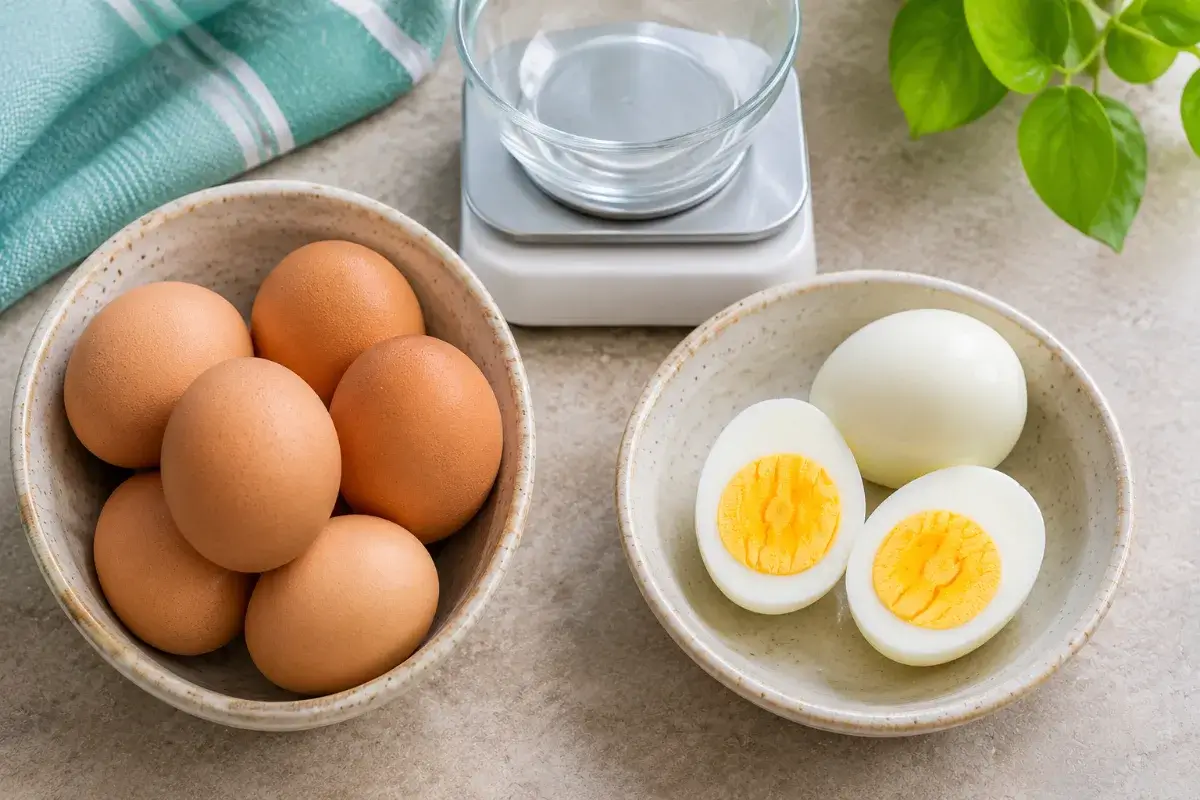
Boiled vs Raw Egg: Which Has More Protein?
The total grams of protein in one egg barely change between boiled and raw forms. The real difference is how well your body can use that protein.
Cooking makes egg protein easier to digest and absorb. Raw eggs are digested less efficiently and also carry a food-safety risk.
- Protein amount: Almost identical in raw and boiled eggs.
- Digestibility: Better after cooking, since heat unfolds the protein structure, making it easier for digestive enzymes to break down.
- Biotin absorption: Raw egg white contains a protein called avidin, which binds biotin (a B vitamin) and can reduce its absorption. Cooking destroys avidin.
- Infection risk: Raw and undercooked eggs can carry Salmonella bacteria. Washing hands, utensils, and surfaces often, and refrigerating perishable food promptly, helps lower this risk.
For everyday meals, boiled, poached or well-cooked eggs are the safer and more practical choice for getting protein in one egg.
Egg White vs Egg Yolk: Where Is the Protein in One Egg?
Both parts of the egg contain protein, but in different amounts and densities. The white has more total protein per egg, while the yolk is more protein-dense gram for gram.
| Part of Egg | Protein per 100 g | Protein per Egg (approx.) | Other Nutrients |
|---|---|---|---|
| Egg white | ~10.8 g | ~3.6 g | Almost no fat, low calories |
| Egg yolk | ~15.7 g | ~2.7 g | Fat, vitamin D, B12, choline, iron |
| Whole egg | ~13.3 g | ~6.3-6.6 g | Balanced fat and protein |
Raw egg white has 45 kcal, 10.8 g protein and only 0.1 g fat per 100 g, while raw yolk has 297 kcal, 15.7 g protein and 26.3 g fat. So if you only eat the white, you save on fat and calories but miss out on nutrients like vitamin D and B12 that sit in the yolk.
If you are managing weight or cholesterol, eating mostly whites with the occasional whole egg is a reasonable middle path. Healthy adults without heart or cholesterol concerns can usually eat the whole egg, yolk included.
How Much Protein Do You Need Daily?
The ICMR-NIN Dietary Guidelines for Indians 2024 set the protein RDA at 0.83 g per kg of body weight per day, which works out to about 54 g a day for a 65 kg adult.
One or two eggs cover a useful but small part of this need. The rest should come from dal, roti, rice, curd, paneer and other protein-rich Indian foods.
If you want more plant-based options to reach your daily protein target, see our guide on high protein vegetarian foods in India.
Myth vs Fact: Protein in One Egg
| Myth | Fact |
|---|---|
| Raw eggs give more protein than boiled eggs. | The protein amount is nearly the same; boiled eggs are just easier to digest and safer. |
| Only the egg white has protein. | The yolk contains almost half the egg’s protein, along with most of its vitamins. |
| Eating raw eggs builds muscle faster. | Raw egg protein is absorbed less efficiently than cooked egg protein. |
| Eggs are unsafe for everyone with high cholesterol. | Most healthy adults can include one egg a day; those with heart disease should ask their doctor about yolk intake. |
Eggs in an Indian High-Protein Diet
Eggs are a convenient, affordable protein source for Indian households. A simple boiled egg, egg bhurji with vegetables, or an omelette with onions and tomatoes fits easily into most diets.
For women dealing with iron or calcium gaps alongside low protein intake, eggs can be a useful addition to meals. Read more in our article on signs of iron and calcium deficiency in women.
Pair eggs with whole grains like multigrain roti, or with dal, to get a more complete amino acid profile across the meal.

Who Should Be Careful with Eggs
Eggs are safe for most people, but a few groups need extra caution.
- Pregnant women: Should avoid raw or undercooked eggs due to Salmonella risk. Well-cooked eggs are safe and a good protein source. See our guide on foods to avoid in early pregnancy.
- Young children and elderly people: Have weaker immunity and should only eat fully cooked eggs.
- People with egg allergy: Should avoid eggs entirely and consult a doctor for safe protein alternatives.
- People with heart disease or high cholesterol: Should discuss yolk intake with their doctor, since the yolk carries most of the egg’s cholesterol.
- Anyone on a raw-egg “protein shake” habit: Regular raw egg white intake can affect biotin levels over time and carries infection risk.
When to See a Doctor
Most people tolerate eggs well, but watch for these warning signs after eating eggs.
- Hives, swelling of lips or face, or breathing difficulty after eating eggs (possible allergy, seek emergency care immediately).
- Severe stomach cramps, vomiting, high fever or watery/bloody diarrhoea within hours of eating raw or undercooked eggs (possible Salmonella infection).
- Persistent digestive discomfort every time you eat eggs.
For severe allergic reactions or breathing trouble, go to the nearest hospital immediately or call 112 or 108.
Conclusion
One egg gives roughly 5-6.6 g of good-quality protein, with boiled and raw eggs offering nearly the same amount. The real difference lies in safety and digestibility, not protein grams.
For daily use, choose well-cooked eggs, eat the whole egg when you have no cholesterol concerns, and build the rest of your protein needs from dal, curd, paneer and other Indian foods.
If you have diabetes, heart disease or are pregnant, check with your doctor about how many eggs and how much yolk fits your specific diet.
Frequently Asked Questions
Q. How much protein is in one boiled egg?
A medium to large boiled egg (44-50 g) has about 5.9-6.7 g of protein, very close to a raw egg of the same size.
Q. Does boiling reduce the protein in an egg?
No. Indian Food Composition Tables show boiled egg at 13.4 g protein per 100 g, almost the same as raw egg at 13.3 g per 100 g. Cooking does not reduce the protein amount.
Q. Is egg white or egg yolk better for protein?
The white has slightly more total protein per egg (about 3.6 g versus 2.7 g in the yolk), but the yolk has more protein per gram and also carries vitamin D, B12 and choline.
Q. How many eggs should I eat daily for protein?
One to two eggs a day works well for most healthy Indian adults as part of a balanced diet. People with heart disease should ask their doctor about yolk limits.
Q. Is it safe to drink raw eggs for protein?
It is not recommended. Raw eggs are digested less efficiently and carry a Salmonella infection risk, especially for children, pregnant women and elderly people.
Q. Do country eggs (desi eggs) have more protein than regular eggs?
Protein content depends mainly on egg size, not the breed. Smaller country eggs usually have slightly less total protein per egg simply because they weigh less.
References
Disclaimer: This article is for general information only and is not a substitute for professional medical advice, diagnosis or treatment. Always consult a qualified doctor for any health concern.